See Libertas in Action

These interactive pages show what an App declares and what clients draw from it. Each runs in your browser on its own; nothing is installed and no account is needed. Each one links to its explanation or reference. The examples remain readable without JavaScript.
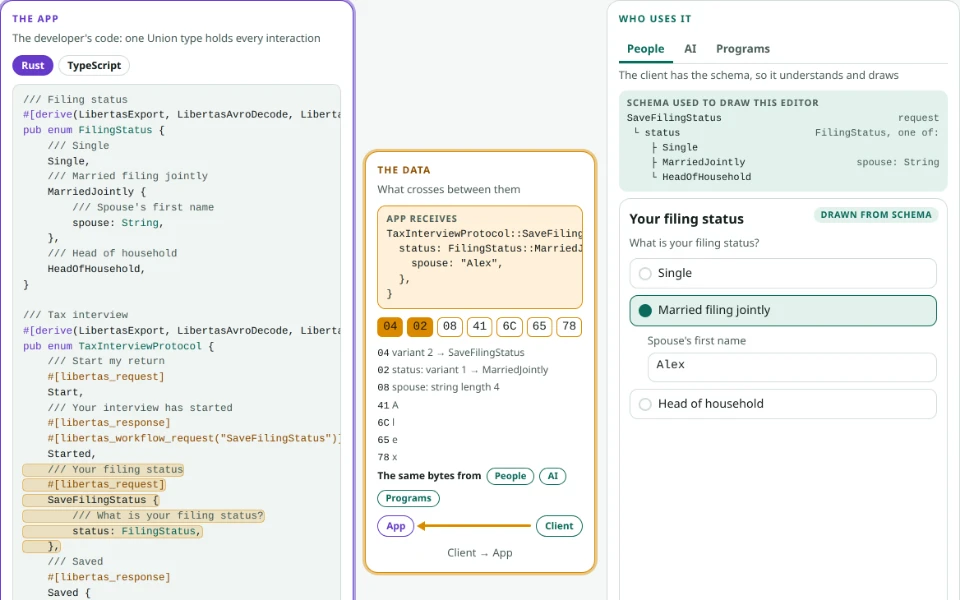
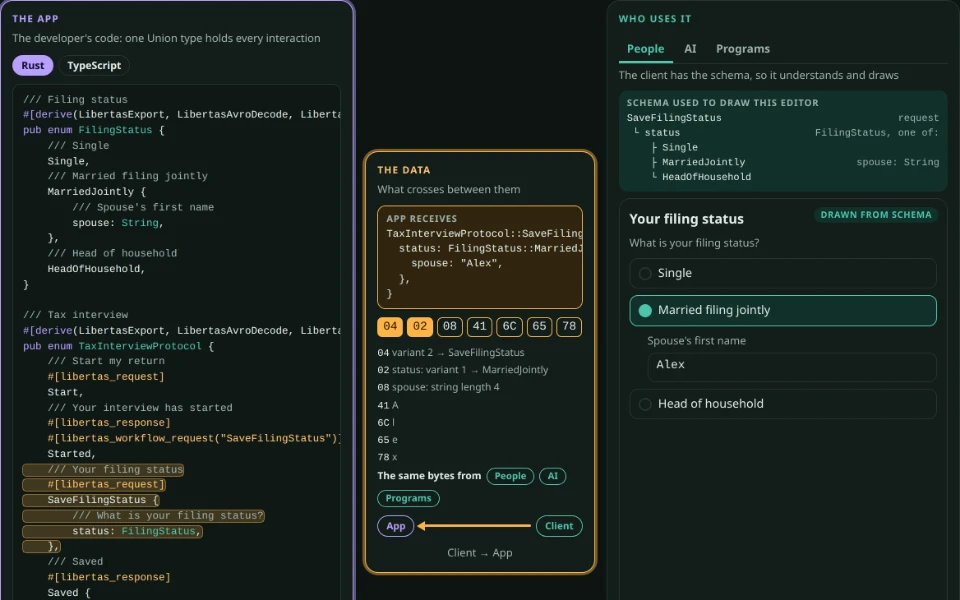
The step-through: Rust App code on the left, Avro bytes in the middle, and the page a client draws on the right.The step-through: Rust App code on the left, Avro bytes in the middle, and the page a client draws on the right.

From Declaration to Page

Everything is in source code and its comments: a GUI for people, tool calls for AI, and the same library for other programs.
Try it →

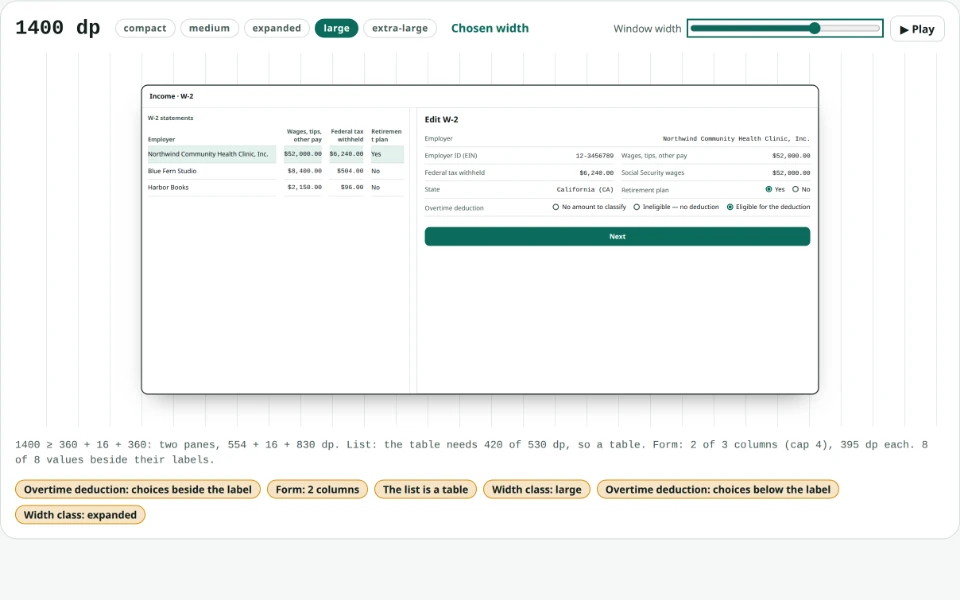
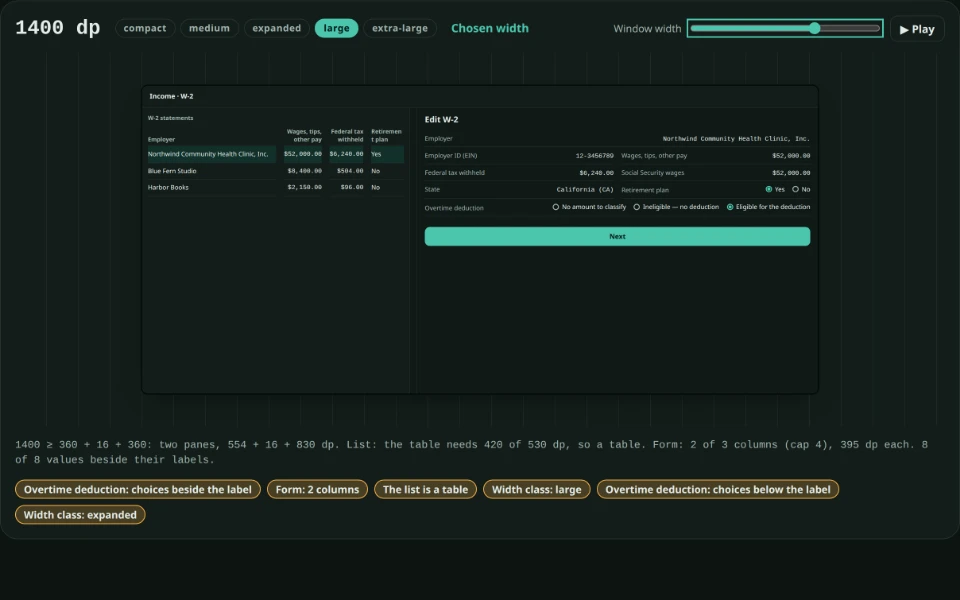
One W-2 declaration beside the screen a client draws from it, at a width the page sweeps from phone to web.One W-2 declaration beside the screen a client draws from it, at a width the page sweeps from phone to web.

Data is everything. The GUI is a given.

Every size, every device, drawn from the data. Adjust it with AI, on live data.
Try it →

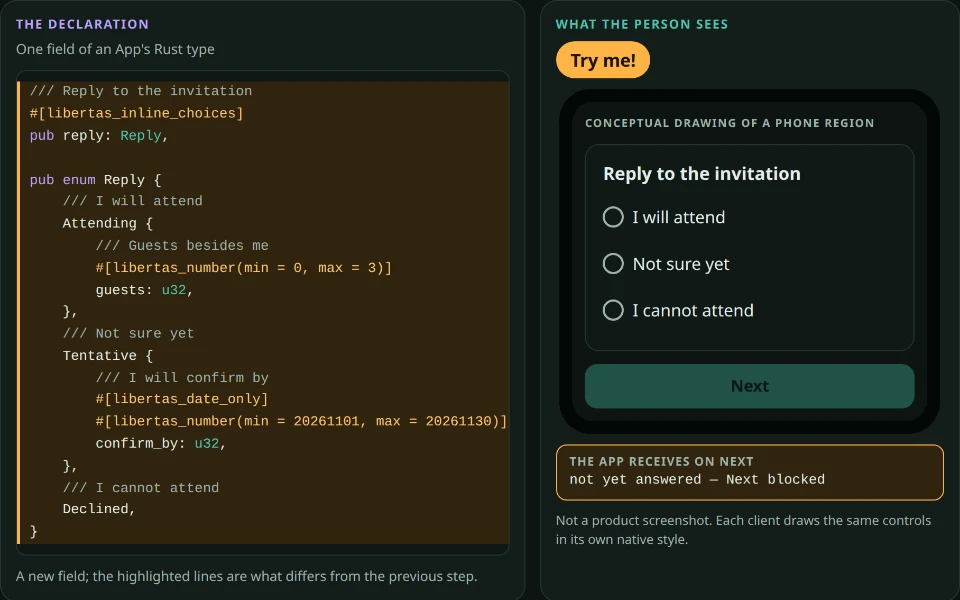
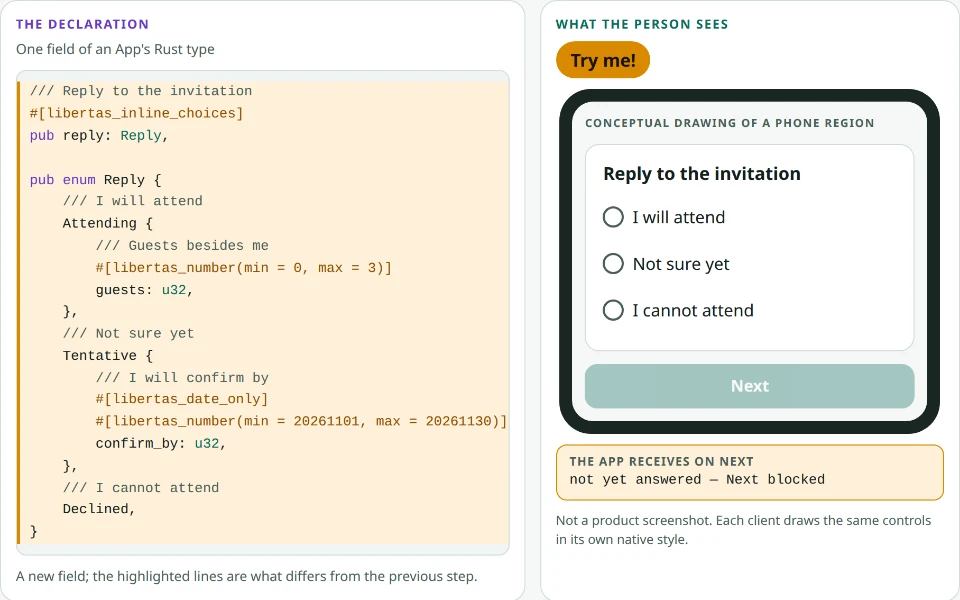
Declarations beside the phone questions a client draws from them, from a plain Boolean to a Union whose answers bring their own questions.Declarations beside the phone questions a client draws from them, from a plain Boolean to a Union whose answers bring their own questions.

Simple Data. Rich Semantics. Adaptive Interaction.

A few declared words turn one Boolean into the right question.
Try it →

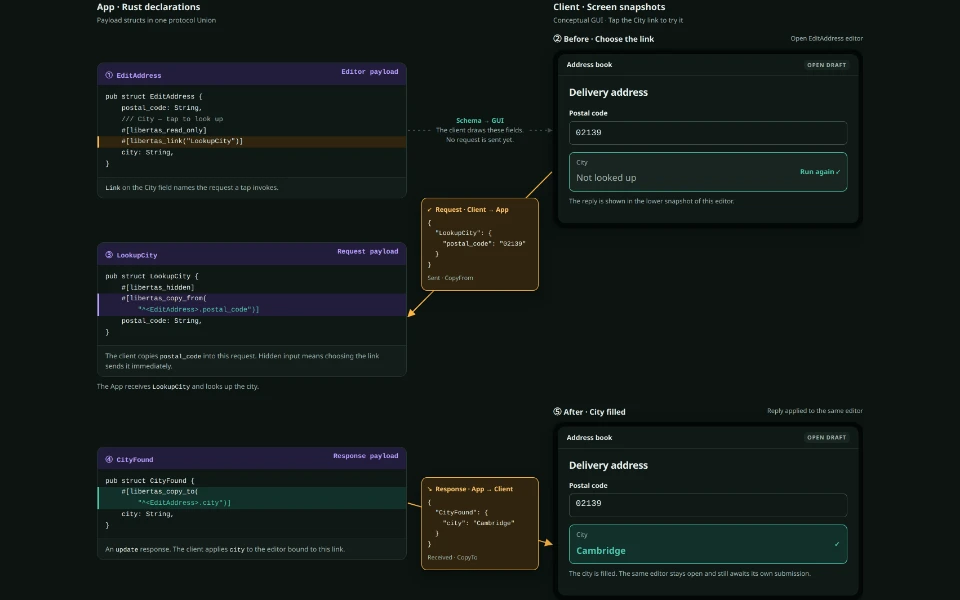
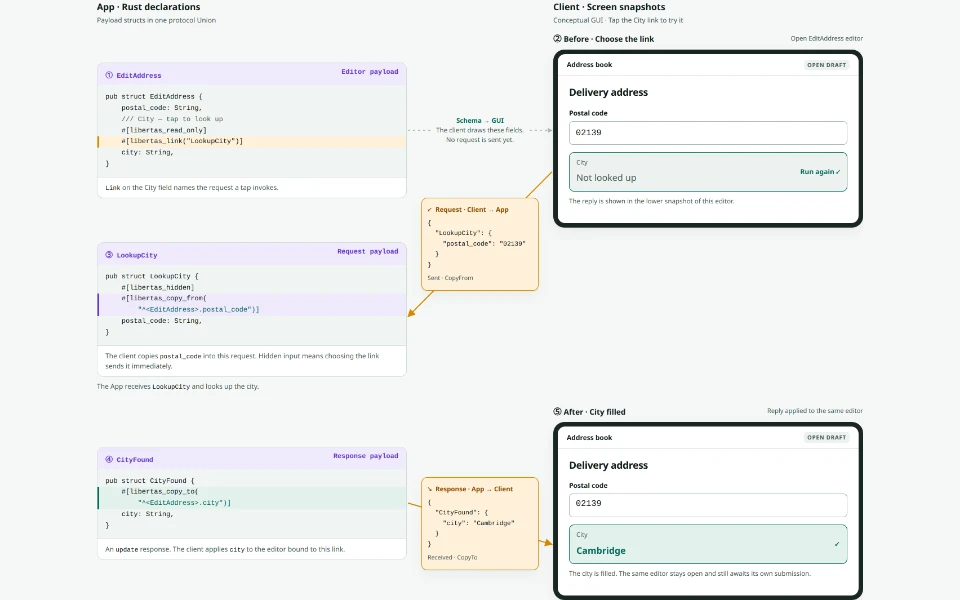
A left-right zigzag connects Rust structs on the left to before-and-after editor drawings on the right, with the request and response data along the arrows.A left-right zigzag connects Rust structs on the left to before-and-after editor drawings on the right, with the request and response data along the arrows.

CopyFrom & CopyTo

A link sends the question. The reply fills the page. Follow one postal-code lookup from the open editor to the App and back.

Try it →

Search Libertas